Embarking on a journey in the world of classical music is both thrilling and challenging. You’re juggling practice, coaching, auditions, competitions, rehearsals, travel, admin, networking… and then someone says, “You should probably have a website as well.”
But in today’s industry, a website isn’t an optional extra or a vanity project. It’s one of the most practical tools you can have — especially as an emerging musician — because it turns your online presence into something you control, something credible, and something that helps busy people book you faster.
Promoters, orchestras, festivals, venues, collaborators, agents, press, donors, and even other musicians are constantly looking people up. When they do, you want them to land somewhere that tells your story clearly and makes it easy to say “yes”.
Below are the key reasons every classical musician should have a website — and how to make it work for you.
Digital first impressions matter (and they happen fast)
Most professional opportunities begin with a quick search. Someone hears your name, sees you on a programme, gets recommended by a colleague, or spots a clip on social media — and the next step is usually: Google.
In that moment, the question they’re asking themselves is simple:
“Why should I book this person and not the many others who are available?”
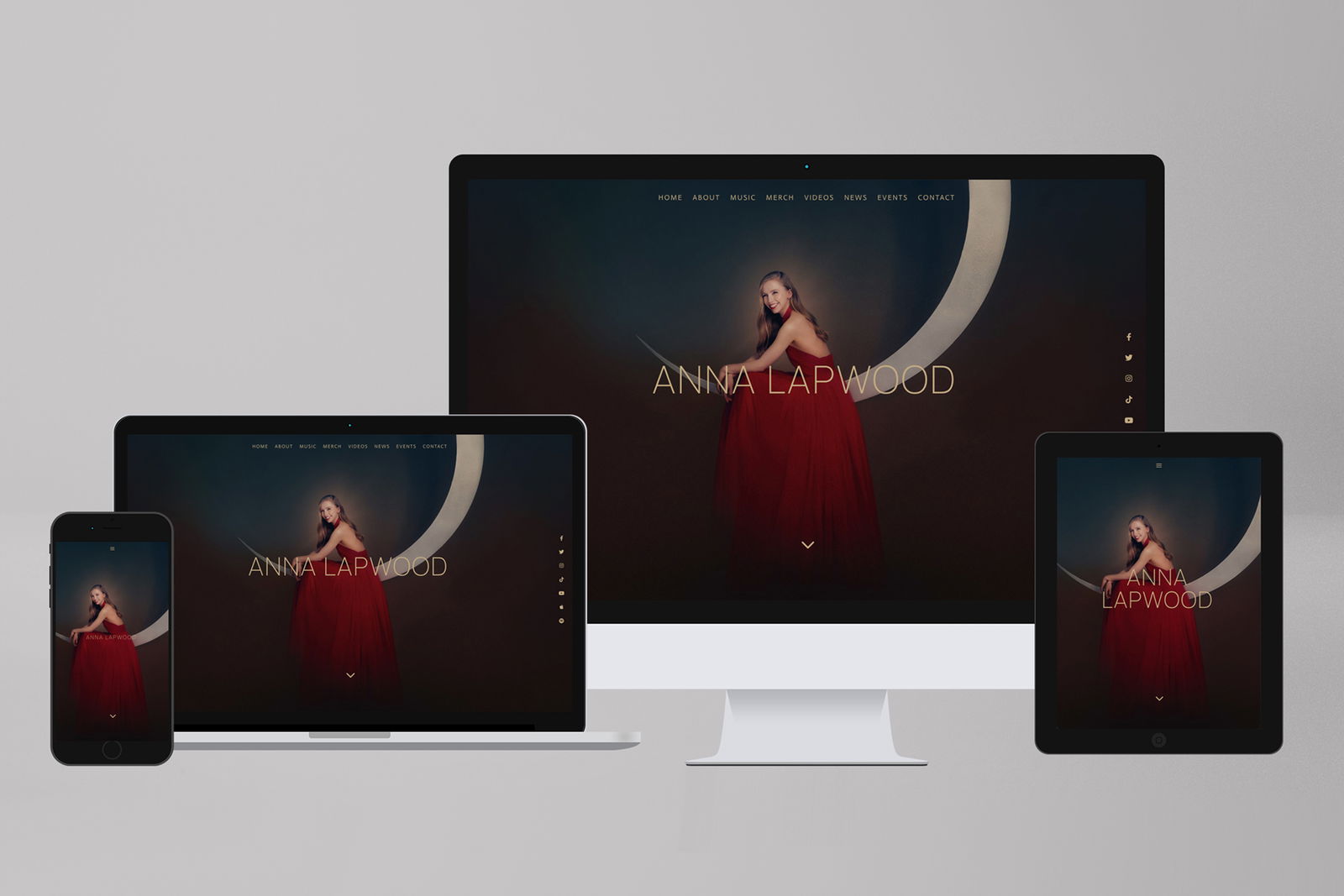
A well-designed website acts as your digital business card, but it can do far more than list facts. It can communicate identity: what you specialise in, what makes you distinctive, what kind of musical world you inhabit, and why working with you will be a good experience.
And crucially: a website is built for clarity. Social media is noisy, algorithm-driven, and inconsistent. Your website is calm, curated, and entirely you.
Your website is your professional home (not rented space)
Instagram, TikTok, YouTube, X — they can all be useful, but they share one big problem: you don’t own the platform.
Algorithms change. Reach drops. Accounts get hacked. Features disappear. A link that worked last year might not work next week. Relying on social media alone is like building your career marketing on shifting sand.
A website gives you a stable home that you control:
- One link you can use everywhere (email signature, bios, programmes, press, applications)
- A consistent place for your materials and updates
- A professional presence that doesn’t depend on trends or platform moods
Even if your social media is strong, your website makes it feel grounded.
Showcase your artistry properly (audio, video, and personality)
Classical musicianship is nuanced. Tone, touch, phrasing, character, repertoire choices — these things don’t fit neatly into a single 30-second clip.
Your website is your canvas: the place where your playing and your personality can sit together in a way that feels intentional.
A strong website lets you present:
- High-quality video (with proper context, repertoire notes, and programme info)
- Audio recordings (studio, live, broadcasts, new music, chamber work)
- Repertoire highlights (what you’re known for, what you love, what you offer)
- Quotes and reviews (press, competition jury comments, testimonials)
- A clear artistic identity (not just “here are my clips”)
Promoters aren’t only assessing whether you play well. They’re assessing whether you’re bookable: clear, professional, distinctive, and easy to programme.
Make promoters’ lives easy (a true one-stop shop)
This is the part musicians often underestimate: promoters are busy. They are comparing options quickly, managing schedules, budgets, programming plans, and internal stakeholders.
A website becomes your “one-stop shop” when it includes everything they need, in one place:
- Biography (short + long versions)
- High-resolution photos (properly downloadable, with credits)
- Repertoire list and recent programmes
- Audio/video recordings
- Press quotes / reviews
- Upcoming dates (or a simple “Selected engagements” section)
- Contact details (you/management/agent)
When all of that is available and clearly organised, you remove friction — and reducing friction is one of the fastest ways to increase bookings.
A comprehensive performance history builds trust
A strong performance history section isn’t about bragging — it’s about giving context.
Promoters want to understand your level and experience quickly. Listing key venues, orchestras, ensembles, festivals, conductors, collaborators, prizes, and highlights helps them make confident decisions.
It also helps answer silent questions like:
- Have you performed this repertoire publicly before?
- Are you used to professional rehearsal environments?
- Have you worked with recognised organisations?
- Are you active and in demand?
Even a short “Selected performances” section can be powerful — especially when it’s easy to scan.
Professional credibility (without saying a word)
Like it or not, presentation affects perception — particularly early on.
A website signals:
- seriousness
- organisation
- reliability
- professionalism
- long-term intent
It tells people you’re not just talented — you’re prepared. In a competitive field, that matters.
And it can subtly position you at the right level: the difference between “promising student” and “emerging professional” is often communicated through details like this.
Better opportunities, not just more visibility
A website doesn’t only help with bookings. It supports almost every other type of opportunity in a musician’s career, including:
- competitions and auditions (easy to share materials)
- applications (festivals, academies, funding, residencies)
- media and press (journalists need quick access to info and images)
- collaborations (composers, ensembles, artists from other disciplines)
- teaching work (students and institutions can see your background instantly)
It makes you easier to say “yes” to — and easier to recommend.
Direct enquiries and clearer communication
If someone wants to book you, they shouldn’t have to hunt around social platforms, guess who represents you, or DM you and hope you see it.
A good website makes contact effortless:
- clear “Contact” page
- management details if relevant
- a simple enquiry form (optional, but useful)
- location/time zone info for international work (helpful and underrated)
This sounds small — but ease of enquiry can genuinely be the difference between “we’ll come back to this later” and “let’s email them now.”
A platform that grows with your career
The best part is that your website doesn’t need to be huge on day one. It can start simple and evolve naturally as you build your career.
You might begin with:
- Home
- Biography
- Media
- Contact
Then expand later with:
- Press
- Repertoire
- Projects / discography
- News
- Teaching / outreach
- Blog posts (great for search visibility over time)
As industry trends evolve — virtual performances, livestreams, educational content, behind-the-scenes series — your website can adapt without relying on someone else’s platform features.
Search visibility (so people actually find you)
This is the quiet superpower.
If someone searches your name, your website should ideally be the first thing they see. But beyond that, your site can help you show up for searches like:
- “[instrument] for hire London”
- “chamber ensemble [city]”
- “classical pianist for events”
- “contemporary violinist UK”
- “Baroque specialist [instrument]”
Even if you’re not chasing SEO, having a properly structured site with clear text (not just images) gives you a much better chance of being discovered — especially for freelance and event work.
Conclusion
In the digital symphony of today’s classical music landscape, having a website is not just a choice — it’s a strategic necessity.
It’s your professional home, your calling card, your portfolio, your press kit, and your easiest booking tool — all in one place.
It helps you control your narrative, present your artistry properly, build trust quickly, and make it effortless for promoters to take the next step.
If you’re serious about building a sustainable career, a website is one of the simplest “high-leverage” moves you can make.
Get in touch
If you’re ready to take the plunge and build your new website, why not get in touch for an initial chat about how to make it happen.
Drop me an email on martin@knightclassical.com.